
Kaltenbach, Caleb. Messy Grace: How a Pastor with Gay Parents Learned to Love Others Without Sacrificing Conviction. Waterbrook Press, 2015.
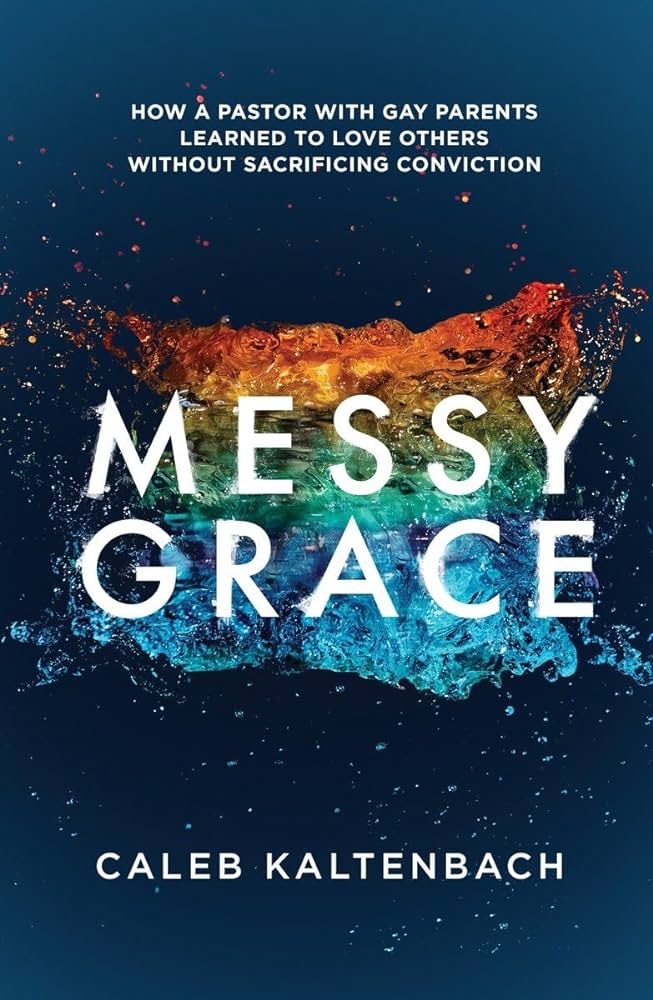
The subtitle of the book is a great description of the content of this work. Kaltenbach shares his personal biography of his parent’s divorce when he was 2 years old and the subsequent “coming out” of his mother and father as gay. He intersperses his own story of coming to faith in Jesus and wrestling with the Bible’s teaching on sexuality and marriage. He rightly argues that Christian love means responding with both grace and truth to LGBTQ+ persons along with everyone else. He includes a helpful chapter on celibacy (“Another Way,” chapter 9) and a less helpful chapter on how churches might respond practically to LGBTQ persons who come to their church (“A Messy Church,” chapter 10). It is less helpful in that it raises questions that churches will face without providing much guidance on how to actually address them. He concludes with an excellent call to root identity in the gospel of Christ rather than trying to change people’s sexuality (“A New ID,” chapter 12).
His writing style is easy to read and the personal story that forms the structure of the book is compelling. His experience as an insider to both the LGBTQ+ community and Christianity enables him to speak honestly and clearly from the perspective of both communities. While clear in his biblical convictions regarding marriage and sexuality, he avoids any dehumanizing tactics that are so common from members of both the LGBTQ+ and Christian communities.
Readers today will note a bit of anachronism as he references the “born this way” argument, which has been abandoned by the LGBTQ+ community because of its inherent conflict with the transgender movement, as well as the lack of mention of the “welcoming and affirming” movement among churches. This is no fault of the author but rather is indicative of the speed with which American culture in general and American church culture in particular has changed on this subject. While Kaltenbach calls for “acceptance without approval” (106), most churches today would describe this position as “welcoming but not affirming.”
I expect that the book will not change anyone’s minds on the subject of marriage and sexuality. However, it will provide a helpful model to Christians who want to be biblically faithful and at the same time navigate relationships with friends and/or family members who identify with the LGBTQ+ community.
 Think These Things